

A hotelier's first hotel
With Alex Ohebshalom, Founder & CEO Flâneur Hospitality

Hello everyone and happy Friday.
Today’s letter is very long, but packed with stories and insights that I hope you find valuable and interesting. If this message is truncated on your inbox, you may read it on the Substack app or web browser.
Enjoy,
N
When Alex Ohebshalom’s father bought 250 Fifth Avenue in 1978, New York was a city most investors were leaving. The building sat as commercial space for the better part of four decades before Alex became, in his own words, obsessed with the idea that it could be something more than a real estate play. The Fifth Avenue Hotel opened at the end of 2023 as a fully independent luxury property, and within two years it had collected two Michelin Keys, and places on North America’s 50 Best for both Café Carmellini and The Portrait Bar.
What follows is the part of the story that doesn’t usually make it into the design features and awards: the brands that came knocking before he chose independence, a capital structure his family carried with cash equity to topping out, and the decision to hold a four-figure rate at barely half occupancy for eighteen months on the conviction that the flywheel would eventually turn.
I. The Redevelopment
What’s the story behind your father acquiring the building, and what was happening at the time when you decided to convert it into a hotel?
My father, Fred Ohebshalom, deserves all the credit. He had an exceptional level of foresight, and really just instinct. Picture New York in the 1970s. The city was on the brink of bankruptcy and it was a difficult place to live at the time. For whatever reason that I still don’t fully comprehend, he saw something else. He and his brothers were immigrants who came from Iran in the late 1960s, a real rags to riches story. They took the trade they knew, importing oriental rugs, built an exceptional business out of it, and reinvested those profits into distressed but extremely well-positioned trophy Fifth Avenue real estate that was very, very cheap at the time.
In 1978 he gets a call from his banker, who asked him to come to the bank on Fifth Avenue at 28th Street and tells him the building is being auctioned by silent bid. He says: “Great, I’m buying Fifth Avenue real estate. Let’s bid.” They put in a bid for $1 million and won, and found out after the fact that they’d overbid by something like $250,000 to $360,000. He still says it often: I’m buying and building for my grandkids and my great-grandkids, this is generational real estate, I’ll buy at low cap rates and hold for the long term.
The conversion came much later, as NoMad began to turn. We saw the Ace Hotel, the NoMad Hotel, all these new buildings going up in a beautiful, architecturally landmarked area, and we had air rights behind the mansion. Once we uncovered all the historical attributes of the property, it became clear that the best and highest use for this asset was a hotel. It deserved a more public, emotional, experiential use than a conventional office play. I became obsessed with the possibility that it could be something more than a real estate play, that it could be a cultural and emotional vessel for a business, which is what a hotel ultimately is.


When you looked at the floor plates of a landmarked building, where you can’t simply repartition walls, did you see something that worked as a hotel, or was it purely the architecture? And what did the landmark constraint end up costing you?
Many of the architectural elements made the case. The floor heights were dramatic. You had nearly thirty-foot ceilings in the original mansion hall coming off Fifth Avenue, which lent itself to the theatrical food and beverage space that’s now Café Carmellini. The Juliet balconies carried romance and drama, and we repurposed them, through a very expensive refabrication, into a multi-level space. I don’t think I’d have had the same response to a cookie-cutter ground-up building that ended up with nine-foot-two ceilings.
We had to take out a great deal of steelwork to make room for mechanical space, because we were capped on square footage and couldn’t go any higher. So we excavated two levels below grade to create back-of-house space, which gave us a 3,500-square-foot production kitchen, fitness facilities, and meeting rooms. And behind any wall, you’re opening up a whole world of madness. A hundred-plus years of everything is back there, old mechanicals, electrical, plumbing, layers and layers of paint over a facade that had deteriorated badly over time. The facade restoration of the mansion alone was roughly a $40 to $50 million project. We fabricated an entirely new cornice, 150 feet of original terracotta, and there were only two true terracotta producers in the United States at the time, one in California and one in Boston, which affected the pricing significantly. Landmarks governed everything down to paint and grout colors, particularly for the new tower and how its materials would complement the mansion facade.
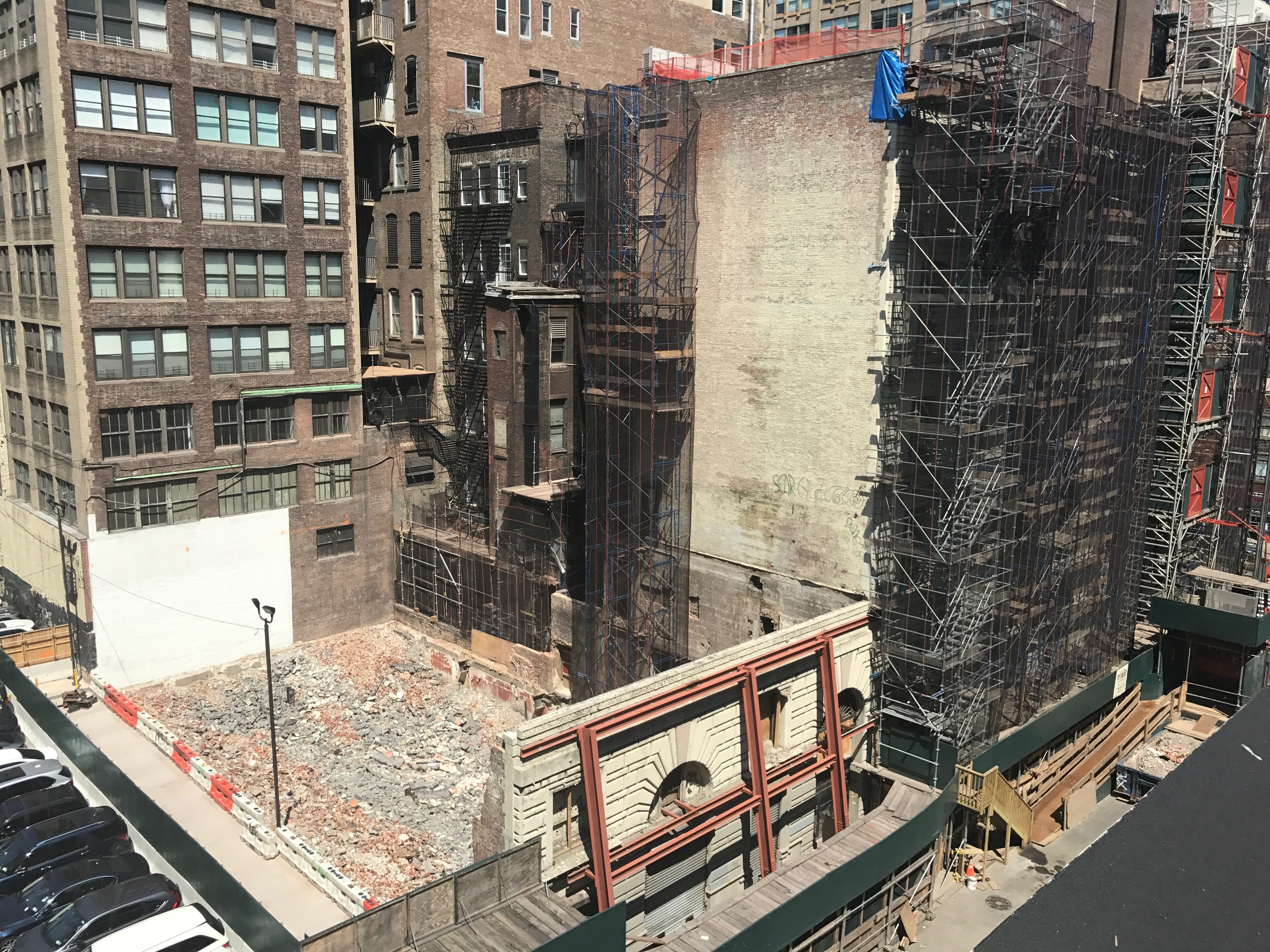
There’s an argument that ground-up development in New York is more accessible and more marketable than working with a landmark. The case for the landmark is storytelling, which is central to hospitality. Yet on an STR report a landmark doesn’t show up as differentiated. A lender or equity investor looks at the comp set and resists the premium you believe the building deserves. You take the landmark because it’s a different product.
I’m a big believer in the power of constraints and how they force you to make tough decisions. You work with what you have, and those constraints become your soul in a way. They prevent the hotel from looking generic, which is huge.
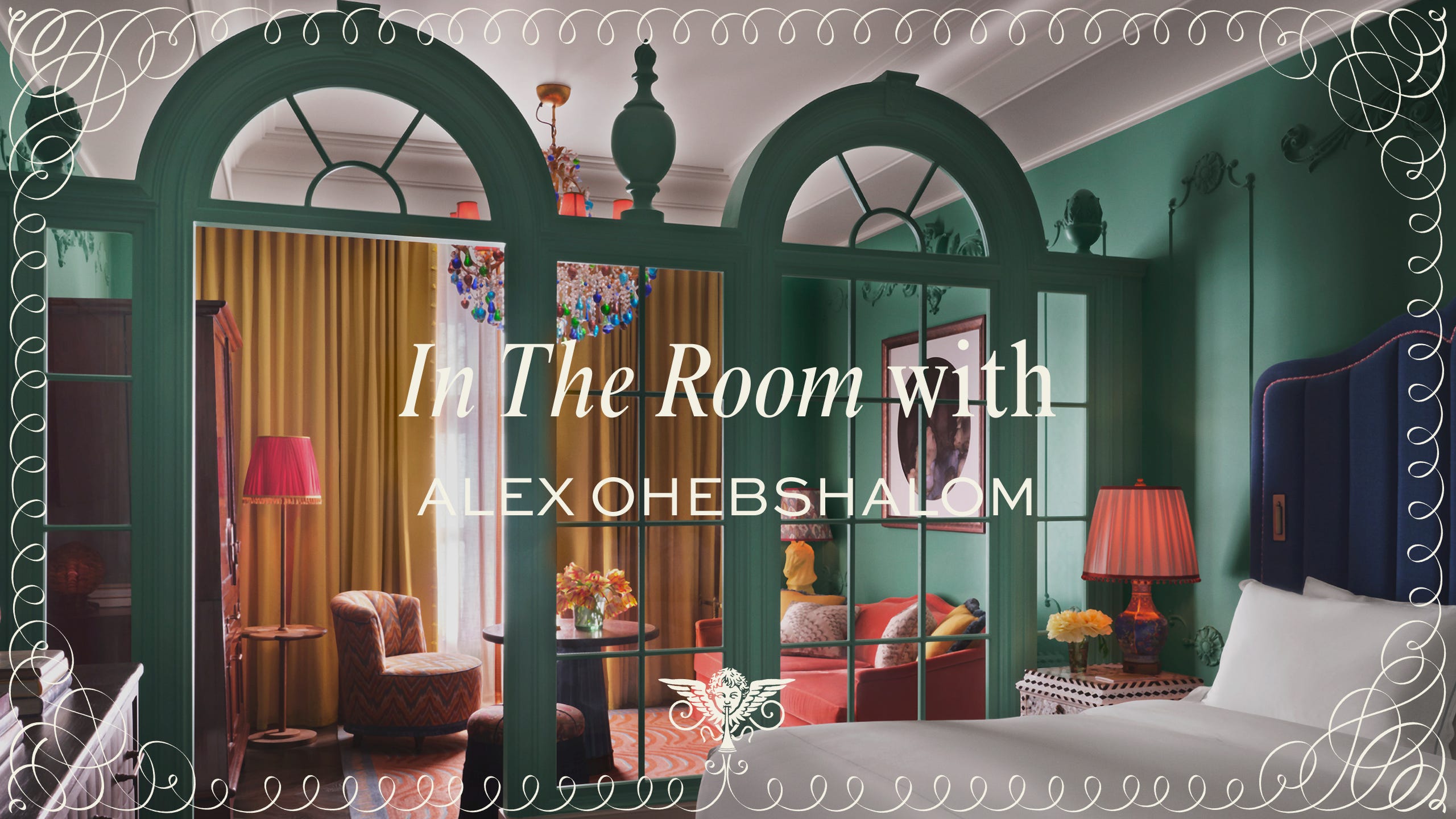
The bones of the building informed the design. The fourteen-foot ceilings in the mansion let Martin Brudnizki play with the arch, that architectural element in the center of the mansion guest suite that won us the awards and put us on the map editorially. We never could have played with something like that without those landmark ceilings. The original mansion hall that became Café Carmellini, with its Juliet balconies, enabled all the drama of the space. Ultimately it’s about storytelling. It’s special to stay or dine in a Gilded Age mansion on Fifth Avenue. Not many people can make that claim. We wanted that to feel special and original, never contrived or cookie-cutter, and that’s where we layered in the entire narrative around the Flâneur, with a dare-to-be-great team that each put their own signature on the design, the programming, the story, and the service.
Can you share the capital stack behind the redevelopment, and how you thought about seeding the enterprise itself, separate from the real estate?
The capital stack is quite simple. My family funded the entire mansion redevelopment and the tower construction up to topping out of the superstructure, which we reached in August 2019, with our own family cash equity. Only then did we bring on more traditional construction financing, starting with a very modest senior piece. As the delays and budget overruns came, we took on a modest mezzanine loan to finish the project, and the family continued to fund as needed.
I’d add that hotels aren’t passive real estate. They’re operating businesses attached to complicated capital stacks. One of the biggest learnings from this whole experience is that the capital structure has to be designed for volatility, because any development cycle will almost always be longer and more expensive than any model can suggest. Ninety-nine times out of a hundred it doesn’t play out according to the paper. You need real holding power and staying power, and the family was geared for that.


II. Operating Independently
You’ve described the redevelopment as a decade-long journey that straddled the pandemic. What are the lessons you’d carry into the next hotel?
Conviction is very cheap at the beginning of a development and becomes much more expensive in the middle. The pandemic tested everything: my mental fortitude, the financing, construction, supply chain, labor, demand assumptions. It put me through the wringer.
There’s an old saying I love, that a founder has to be near delusional to see the vision through. I think it’s true. You can stare at a big plot of dirt for years, and that’s what I did. It almost brings me to tears to remember it. Long nights standing in a decrepit mansion, looking at a demolished plot of land, with so many things out of my control. You need the conviction, the endurance, the foresight, the resilience, and the somewhat delusional belief that the thing will get built.
The silver lining is that, in hindsight, the delays worked in our favor. They forced us to take more time to think, edit, refine, and obsess over the details, and to finesse the story so everything felt more layered. We trained for a full year. I had the whole team on board, starting with Olivier (Lordonnois, of Hotel de Crillon and Ritz Paris) and everyone below him. We built an entire offsite training facility with model rooms finished to the last centimeter, and we trained every day, morning to night, to build the service model. We wanted to be one of one. That gave us a real head start when we opened.
There are many stories inside that decade. A lot of people don’t know this, but before we decided to go fully independent, we were approached by all the major brands. We got very close with one initially. It was supposed to be a soft-branded property, a Thompson Hotel, much like what The Beekman is downtown today. Various groups came in with key money and wanted to do different one-offs. Then we hit a couple of delays, things fell out, and it gave me the space to look in the mirror and ask whether I had a strong enough brand value proposition to make a compelling case for a true iconic independent.
That’s where I had the audacity to go to my team with the idea behind Flâneur Hospitality, the story I wanted to tell, the philosophy I wanted to share with the luxury consumer. Everyone received it with open arms. We believed in the idea of patient, present, attention to detail. Then I had to go to Martin (Brudnizki) and tell him we were throwing all the design out the window and starting from scratch. That set the timeline back and added enormously to the budget. We probably lost another one to two years on a redesign around Flâneur, and it coincided with the financial pressures of COVID and rising interest rates. Then we brought in our food and beverage partner and had to redesign all the kitchens and mechanicals to support their venues. Everything went from four-star execution to five-star, and to whatever five-and-a-half-star means today.
For an owner weighing the same decision, how do you frame the choice between taking a flag and going independent?
It comes down to risk tolerance. Safety and comfort against capturing all the upside. Capped rates against uncapped potential. The certainty of automatic distribution on day one against building your own flywheel of distribution and awareness, which you have to invest in. It takes discipline, mental fortitude, and a lot of guts. You have to be hell-bent on your ability to execute, to time the market, to build a one-of-one product, and to outlast the headwinds that will inevitably appear. It’s not for the faint of heart. It’s an entrepreneurial effort through and through.
What’s the true cost of launching a management company alongside your first hotel?
The broad strokes come back to lean methods. Do as much as you can with as little as possible. My initial objective was to hire the best leadership at the executive level, top generalists with enough experience, pedigree, and expertise to be dangerous across every discipline of hospitality. That starts with an exceptional general manager and managing director and trickles down into sales, marketing, revenue management, the design team, and the brand team, which is all in-house.
The majority of the initial expense was branding and marketing: creating the visual identity, all the touchpoints, the collateral, the training, and all the small things people observe in the property and away from it, physically and digitally, that build awareness of the brand. We also outsourced strategically wherever it made sense, which gave us a real advantage. The big ones are design, with Martin Brudnizki, and food and beverage, with NoHo Hospitality and Andrew Carmellini. We outsourced some functions like revenue management, at least partially.
Over time we’ve brought a lot of it back in-house. External agencies once handled our graphics, our website, and our backend digital marketing, and we’ve since built that capability internally. I now have a new director of marketing and full control over our social and digital presence. I want to control more and more of the brand touchpoints.
Café Carmellini and The Portrait Bar landed on North America’s 50 Best lists. Both are remarkable for a hotel, where food and beverage is notoriously difficult to execute well, especially in a city like New York where you get to be part of the fabric, with public spaces inside a private building. What’s your approach to urban placemaking within hotel food and beverage?
It starts with the conviction that hotel food and beverage outlets can’t be a hotel amenity. They have to stand on their own, designed and programmed and branded and operated and acknowledged across the market as one-of-one, best-in-class venues that happen to coexist within a one-of-one luxury hotel. That’s the philosophy behind each of these spaces.
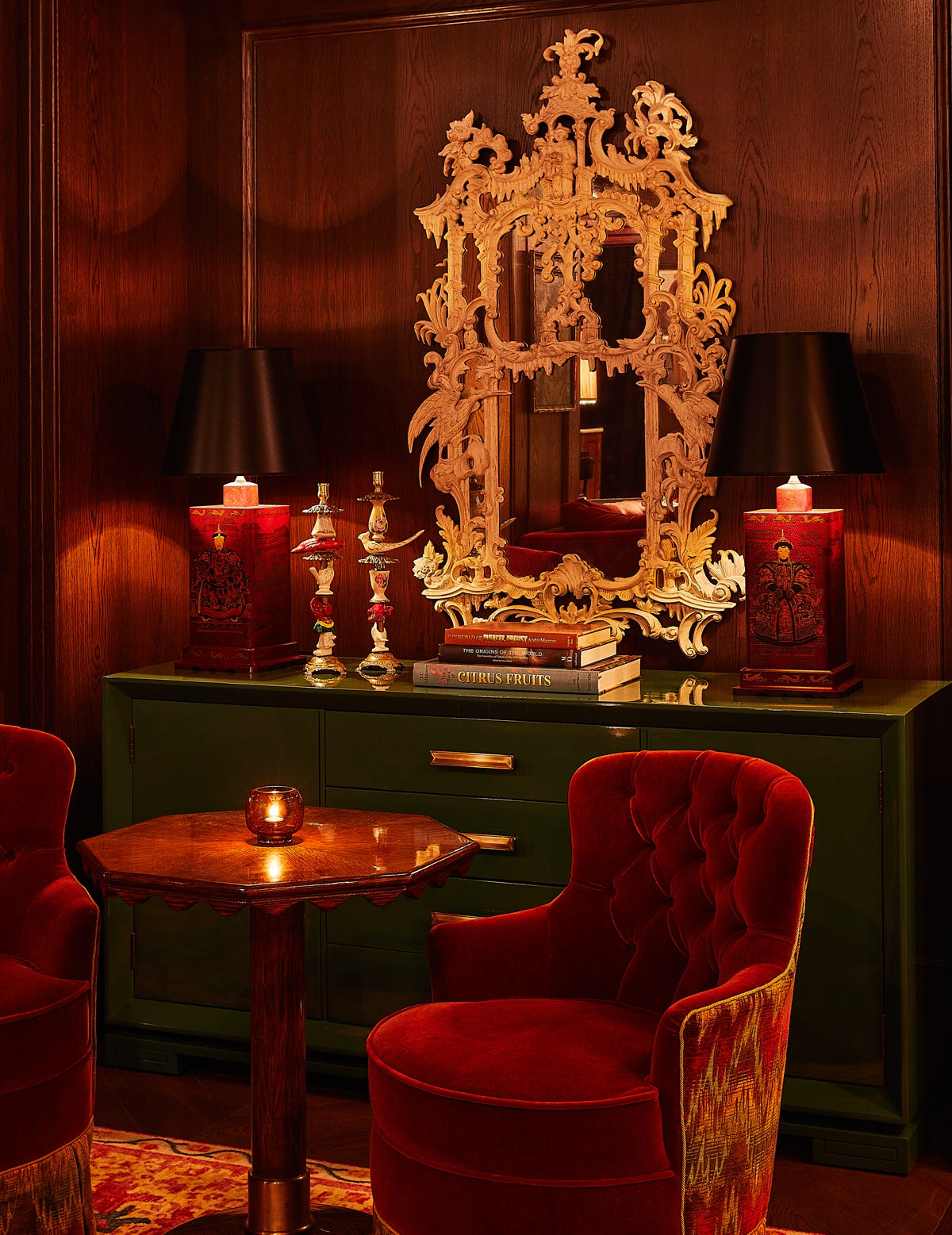
I say this with humility, but I’m proud of it. Last year I believe we were the only hotel in the world to be awarded 50 Best recognition for the hotel, the restaurant, and the bar. That speaks to the willingness to go further, to refuse to build just another lobby bar. We could have done the model where the bar is a reliable revenue maker but you wonder about its longevity. I’m a believer that the standards have to be set very high. These venues are the emotional engines of the hotel. They’re the melting pot, the center of gravity, where the personality of the brand gets expressed. It was very important to me that both Café Carmellini and The Portrait Bar be recognized globally in that light.
Do you believe these awards drive revenue?
Michelin and 50 Best are becoming more of the moment and more widely regarded, and at the independent level they’re non-negotiable. They drive credibility, conversation, and pricing confidence. They matter enormously to the travel advisor community, to PR, and to the team, who get that much more excited having something to work toward. They don’t replace operational excellence, but they drive morale, and that can’t be overlooked.
I see people with no real interest in hotels talking conversationally about Michelin Keys, which is suddenly a thing. Anecdotally, when people ask me for travel advice, they reference the 50 Best list. I’ll stand outside Café Carmellini and watch passersby admire the facade and the landscaping, then notice the 50 Best plaque on the wall, look at each other, and decide to go in. That’s organic marketing at its core, and I’ll play into it for as long as it’s relevant and be a steward of those institutions. Awards don’t create demand out of thin air, but they reduce doubt in the luxury market. They help a guest feel safer choosing something independent rather than defaulting to a big brand and their loyalty points.
Independent hotels live and die by distribution in a way flagged properties don’t. Walk me through how a guest books a room at The Fifth Avenue Hotel, and what has worked to drive that demand directly?
We push the funnel and the sales channels as hard as we can toward direct bookings, because direct to the website is the highest-quality point of sale we can ask for. The OTAs have a role, particularly in discovery, but they can’t be the backbone of a true luxury hotel. At the luxury level the healthiest demand is direct, repeat, consortia, travel advisor, corporate, and group, and for longevity I want it to be organic. Marketing follows brand, so I put a great deal into brand awareness.
From the genesis of the project we had a relentless PR strategy, bringing the best editors and tastemakers, people like you, through the property pre-opening to stay, eat, and tell the story. We hosted the Oscar de la Renta New York Fashion Week show in the ballroom and in Café Carmellini right before we opened, and it led to a full-page Vogue feature dedicated to the hotel. We opened with Sarah Jessica Parker at the Juliet balcony pouring champagne over a cascade of glasses, which led to more full-page features in major publications. That was the beginning of the flywheel. We were inducted into Leading Hotels of the World before opening, which gave us early exposure into the Leaders Club, and Amex Fine Hotels and Resorts, which not everyone is accepted into, opens the funnel further. We built a best-in-class in-house marketing team and strategically built a base of corporate and group business without diminishing the brand or the rate positioning.
Ultimately the product has to speak for itself. We under-promise and over-deliver, with a full team of onsite butlers, an exceptional gifting program, and personalized, anticipatory, invisible service. I’ll be honest that it didn’t start with a huge ramp. It took a good year and a half to build to this level of distribution. We operated at mid-fifties to low-sixties occupancy for the first year and a half, and we’re now ramping into the high seventies and low eighties. That was a deliberate strategy. We held the rate and trusted that the flywheel would eventually take us to stabilized occupancy.
How did you think about pricing a new hotel and a new brand, and how has your view of rate changed as the accolades have accumulated?
This was a very tough one that we debated for months before opening. The conventional wisdom at the independent level is that you set the rate and hold it as long as you possibly can until you have proof of concept, and that momentum will eventually build. That requires real holding power, patience, and deep conviction that you can execute and quickly gain guest confidence and travel advisor trust. Everything has to go better than planned, from PR and marketing to the macro environment.
It was painful, but the minute you give relief on the rate, it’s extremely difficult to claw your way back up. So we preempted the reality that we’d have to hold a $1,000-plus rate for a year to eighteen months at low occupancy, with a high degree of confidence that it would ramp and stabilize.
III. The Flâneur Philosophy
You’ve been open for about two and a half years. How has the philosophy behind Flâneur evolved?
Flâneur is about magical luxury, about curiosity and cultural authorship. It’s built on the belief that the best hotels aren’t standardized products. They’re emotional and cultural vessels that help you see a city differently and remind you of your own uniqueness. We’re not trying to make every property look the same. We’re building an iconic collection with a recognizable intelligence, a shared standard of taste, generosity, and emotional detail. It’s a feeling and a felt brand.
The hard part is translating emotion into the physical world and keeping it relevant without ever feeling stiff, theatrical, or scripted. That’s why I hire for the highest levels of emotional intelligence. I don’t want anyone operating from a script. I want them present, listening intently, asking what the guest needs and how to deliver it before the guest even knows they need it, so the next time they think about New York they want to come back.
Martin Brudnizki has a distinct, maximalist style that some find polarizing. Were there moments when you had to pull him back, and moments when he pushed you somewhere you were unsure of that turned out to be right?
I love this question, and I love talking about Martin, because he’s such a partner. He’s the master of the grand modern fantasy. He’s of the moment and yet a classic, and his designs will hopefully live forever.
He’s as audacious and courageous as they come, with a clear and pointed point of view that could be read as polarizing. That’s exactly what we wanted. I wanted to take a hard line and come out with something ambitious and exciting that not everybody would love at first look, but that the right tastemakers would fall in love with, and they did. From there it spread organically and became more widely embraced over time. That tension was absolutely critical.
The real magic is in the tension between fantasy and function. I had a big vision for what the hotel should be, and the challenge was making it functional, practical, accessible, manageable, and cost-effective. Martin understood that the building could carry romance, color, pattern, and theatrics, and I challenged him to lean more deeply into the Flâneur narrative, that collection of beautiful objects, antiquities, furniture, and artwork from all over the world. It still feels like a Martin project, but a little more unique than the typical one. In the guest rooms everything is perfectly positioned, low-touch and high-tech, with outlets in all the right places, DigiValet, and Lutron systems controlling the lighting and shades. It was designed smartly, but with the grandiosity and romanticism that Martin brings.


You once said in an interview that the problem you wanted to solve was walking into a lobby and seeing everyone on their phones. What did you design or program into the hotel to make the lobby a place people inhabit rather than pass through?
I was quoted on that before we opened, and it was taken a little out of context. The writer at the time almost suggested we were building dead zones where phones wouldn’t work, which was far too literal. The real point is to create rooms, rituals, and moments that make the phone feel less interesting. There’s so much more to be felt, seen, and discovered in the human experience than in the digital one.
As much as I’m a proponent of AI, and we use these technologies across all my businesses to reduce friction and cost, I’m fundamentally all in on the human experience, and I believe we have an obligation to bring people back into it. The only way to pull someone off their phone is to give them something better to look at, taste, overhear, discover, or feel. So we curated the artwork to provoke curiosity and closer inspection. The Portrait Bar has a handpicked collection of literature and portraiture. You enter into a grand, intimate, romantic lobby, and the first thing you see is an extraordinary tapestry that provokes the question of what it is and where it came from. Only by asking do you learn it’s a hand-created work that took three years, made by a renowned museum artist, and at every corner of that twelve-foot piece you notice something different.
Then there are the rituals. Someone knocks on your door at 5:05 on a Tuesday with the most beautiful assortment of accoutrements for a martini ceremony. We’ve expanded that into book culture, matcha culture, and wine culture, with a 17,000-bottle collection in the cellar. How do you invite people into that and teach them something they didn’t know they loved? How do you bring them into the kitchen to explore? There’s so much in this vessel that should take you off your phone and create a deeper sense of connection, with the city and with yourself.
I want to close on the greats of New York. You’ve spoken about wanting The Fifth Avenue Hotel to earn its place among institutions that have decades of mythology behind them. What does it take for a new hotel to earn that kind of cultural weight?
It’s a huge undertaking. The traveler has grown enormously more sophisticated, and it takes far more to impress them now. You can’t get away with what you once could. Lasting cultural weight comes from consistency, from taste that can’t be bought or replicated, from service, from best-in-class food and beverage, and from mythology and storytelling. You can’t buy it through PR. You have to deliver on the promises.
Most of all, it comes down to time. Time is your greatest weapon and also the greatest force against you. Many of the greats weren’t immediate successes. I can point to examples I know firsthand. The Greenwich, The Crosby, and The Mark all struggled in their early years, financially and in terms of awareness. It took years to build momentum, and it took real holding power. After five or ten years they looked like overnight successes and became classics. That’s a testament to their conviction, their belief in the product, and their consistency across every discipline.
Cultural weight is earned when a hotel becomes useful to the city, not just impressive to travelers. Geographically we filled a real void at the top of the true Midtown luxury market for an independent, between the 50s and downtown. We added to the fabric of the city. It’s earned when people start using you as a reference point, when they say meet me there. So many people have fallen in love with The Portrait Bar and treat it as a city institution, and that adds to the mythology and the flywheel. It becomes an ecosystem, a constellation of great venues that together make a one-of-one asset. You have to come and feel it to really know it.
Thanks for reading this interview. For more of The Stanza, subscribe to the weekly digest and follow on Instagram.
A masterclass in founder-led hospitality. The stories of a first property always hold the most potent vision for what’s possible....
Can not wait to check it out ! What a dream