

Building the playbook for wellness hospitality
With Neil Jacobs, former CEO, Six Senses & founder of Wild Origins

Neil Jacobs is the rare hotelier who has sat on every side of the table — operator, developer, and private equity. In 2012, he acquired Six Senses with Pegasus Capital Advisors for roughly $65 million, taking over a struggling collection of beach resorts in Southeast Asia and rebuilding it into the definitive brand in wellness hospitality — before selling it to IHG in 2019 for $300 million, a number he named and refused to negotiate. Prior to Six Senses, he spent five years at Barry Sternlicht’s Starwood Capital, where he helped develop the Baccarat and 1 Hotels brands, and before that, 14 years at Four Seasons, where he opened Asia for the company and ultimately ran the Asia Pacific region. Today he runs Wild Origins, his advisory and investment venture spanning hotels, residential, and tourism.
Six Senses is the brand that pioneered the category of wellness hospitality. You joined in 2012, and you scaled the brand from eight resorts to 27. What was your vision of wellness hospitality at the time, and what parts of that have or haven’t come true?
When New York private equity group Pegasus Capital bought the company in 2012 from the founders, it was particularly known for very good spas but wasn’t really doing any wellness. At the time, the company had probably 30 spas sitting in other people’s hotels, not their own. The hotel industry mostly had no idea about that stuff, so it was much easier to let someone else take the spa reins.
The brand is 30 years old now, so we owned it for half of its life. When we bought it, we had four specific goals. One was to take it out of being a resort brand on a beach in Southeast Asia — which is what it was, apart from one property in Oman. Two was to create a few very selective expressions of the brand in gateway cities. Three was to evolve the design ethos, which hadn’t moved much in the 15 years the brand had been alive. It was created with a focus on “barefoot luxury” back then — very Robinson Crusoe. It wasn’t particularly designed. A chair was four pieces of wood, a bag of nails, and a hammer. Back then that was the thing, it was cool. So, we felt strongly there needed to be some real design that respected the values of the company and the sustainability around materiality. We didn’t want to change that piece — we wanted to design it, to finish things off. The furniture needed to be a little more refined, without moving into polished marble and crystal chandeliers.
Lastly, we wanted to roll out a real wellness agenda, and to continue the conversation around sustainability in a very meaningful way. Those were the goals. The wellness piece, we believe, was a huge driver of the brand’s success over the last 15 years. Six Senses was the only brand with any scale that managed to do that. You said 27 — today it’s 29, with 20 more under development. Don’t get me wrong, there are some great independents that do it well. But we never wanted to be a destination spa. We never aspired to be a Lanserhof or a Canyon Ranch — that’s a completely different model. So, I’m proud of how we, and the big wellness team we had, were able to drive that agenda forward.
You said in a previous interview that you dislike the word luxury. Tell me more about that.
This is controversial. We had two words that were taboo: one was luxury, and one was exclusivity. We’d tell the team, whenever you’re naturally going to use that word, stop and think of something else. The word luxury carries a certain connotation — that it is not for everybody, that you’ve got to be in a certain socioeconomic group and be ready to spend $1,500 a night or more for a room, which is where the high-end industry sits today. We had such purity of intent with our wellness and sustainability platforms that I didn’t want marketing to say: this is just for us special people who have lots of money.
That said, that’s the market we played in. So, goodness, am I being hypocritical or not? But I said, let’s just not use the word. Let’s talk about quality, natural beauty, and the things that describe it, without that connotation.
It’s the “show, don’t tell.”
I think so. We were very understated as a brand, and very mindful about what we talked about publicly. I always used to get into trouble — the communications people would check with me before every interview: don’t say this, don’t say that. And I’d go, okay, okay. And then I’d say it. Because there are no secrets, really. And the integrity of the brand was very important to us.
Before Six Senses, you were at Four Seasons from 1994 to 2008. How did the hotel business evolve throughout all those market cycles, and what are the patterns you’re seeing unfold today?
What has happened over the years is that there’s much more storytelling now. We suffer from so many brands, so many hotels, and it’s harder to distinguish between the — I can say luxury now — the upper-luxury products out there, because they’re all pretty much the same, with the greatest respect to everybody. I think Four Seasons still has the best service culture of any company in the world. But at that level of the market, it’s got to be so much more than great service, great food, and a comfortable bed. If you don’t have those, you’re not even in the game.
The successful groups — and the startups that break through — are those with a very, very clear narrative. You can’t be everything to everybody, and that’s what most of these brands attempt to be.
Agreed.
And hence they end up a bit vanilla. Whereas brands with a distinct attitude and narrative will not appeal to everybody — and that’s fine. Six Senses did not appeal to everybody. People would go there and say, that’s a bit too rough for me, a bit too rustic. But there were enough people that loved it. The really successful brands have a very distinct story, well-articulated, because it’s such a crowded market. Unless you can differentiate in some way, you’re just going to be middle.
You’re always around people that are making a lot of big decisions in the hotel world — both operators and capital. Why do you think these people are so afraid to take risks and truly differentiate themselves?
Why? Because it’s kind of a vanilla world. On the capital side, VC investors will perhaps go into something unproven, but most capital sources in hospitality don’t have the stomach for that — particularly once you’re talking to sovereign funds or institutional money. There’s the odd exception, like our friends at Cain, who are very serious and very disciplined, but if something resonates, they’ll say, let’s give it a shot. And they’re a bit different because they’re happy to be in both the brand and the real estate — you don’t find many investment groups that also want a piece of brands.
You joined Starwood in 2008 to build the Baccarat and 1 Hotels brands. As Starwood is a different type of owner in the way they’re capitalized, what lessons did you learn about building hotels to return capital within a relatively short time frame?
I probably learned more at Starwood Capital in four or five years than I did in 14 years with Four Seasons — about PE and the transactional side of the business. That was in fact why I left Four Seasons. I was in Singapore running Four Seasons Asia Pacific, and everyone I knew was a banker. And I said, I want to be a banker — everyone I know is a banker. So, I ended up with Barry at an interesting time in the world. I showed up at the beginning of 2008, and a week after I arrived, Bear Stearns and Lehman went up, and everybody was going out of business.
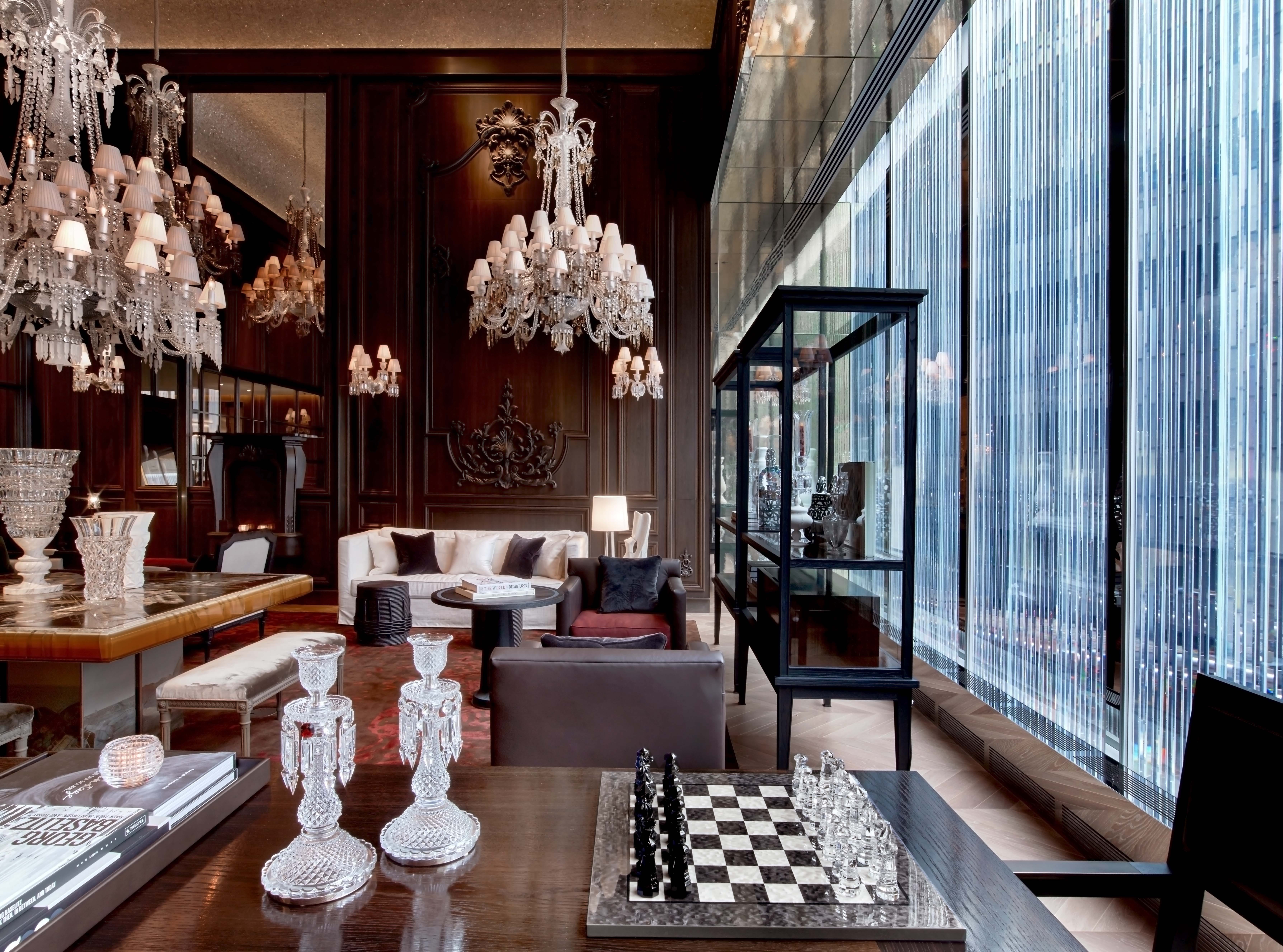
I went there ostensibly to develop Baccarat and 1 Hotels, but because of what happened, I ended up moving to Paris with Concorde, a small luxury group he owned. He ended up with Baccarat purely by accident. He’d bought the assets of Taittinger, the champagne house, because they had 700 limited-service hotels — that was the platform he was after. But they also owned Baccarat crystal. So, he ends up with the crystal brand. What am I going to do with this? I don’t know — let’s create a hotel brand around it. So that’s what we did.
The private equity experience has you looking at completely different metrics. It was like doing a finance degree — most hotel guys don’t have that kind of background. It was interesting to me that before you make the investment, you plan the exit. I’m going, what’s that all about? We’re not going to invest in anything until we know how we’re going to get out of it? Interesting concept. And IRRs are always dependent on cap rates when you sell — all this stuff. It was a completely different vocabulary. Even as builders, when we financed hotels, we never really thought much about the way out — I was fundamentally an operator. So, I learned a lot, and I’m very, very grateful for Starwood Capital. That said, it’s not an environment I would have chosen to spend my life in.
Why?
I think hotel people are fundamentally caregivers. We spend our lives looking after people. PE guys don’t care about stuff like that.
They truly don’t care if you live or die.
There’s less team spirit, because they make their money on their deals. Don’t screw with my deal, you know? So, it can get toxic. And Barry has a huge reputation. There were a lot of young Harvard graduates at the firm who thought he was a rock star. And he is a rock star. Just look at what he has created over the years. The ability to raise huge capital and produce stellar results consistently.
We lasted four and a half, five years, and people said that’s a long time. He’s brilliant. He’s one of the rare people in his business with an equally developed right brain and left brain. He’s as comfortable in a design studio as he is funding the deal. In fact, the design part, the creative part, is his recreation.
He played a huge role in institutional capital flowing into boutique hotels. That was his thing.
For sure. But he’d already created Starwood Hotels — people don’t realize it started with Starwood Capital. Starwood Hotels was called Starwood Hotels because of Starwood Capital. And W was Barry and his wife Mimi, at their kitchen table in Greenwich. He didn’t include Starwood Hotels in that process — he was the first to say this brand is going to be run separately, I’m not going to put it into a big public company. So, it had its own team, its own creative team — everything was dedicated to W, much to the upset of the rest of Starwood.
It was the same with Six Senses for four or five years after we sold it — it was kept very separate from IHG. There was a CEO at the time that understood the dynamic: you buy these boutique companies because they’re fun and cool and entrepreneurial, and then most companies proceed to suck them into the system and wonder why they lose their soul. For the first five years, we had a CEO at IHG that totally got that — much to the upset of many within IHG, because they weren’t allowed to touch it. But that’s how it kept its identity.
Are there any similarities between the market at that time — 2008 — and today?
